Salt-Tolerant Plants for Canal-Front & Beachside Gold Coast Homes
Saltwater proximity kills plants. Not dramatically, not in a week, but steadily — over months. Salt-laden onshore winds deposit aerosol on leaf surfaces. The salt draws moisture out of leaf cells (osmotic stress). The plant burns from the edges in. Within a season, a non-tolerant species in a canal-front Gold Coast garden looks like it's been through a heatwave it can't recover from.
Living in suburbs like Surfers Paradise, Main Beach, Broadbeach, Palm Beach, and Currumbin means choosing plants that can handle that aerosol load. This guide breaks down the species we actually use on canal-front and beachside Lux jobs, by zone and role.
Salt exposure zones on the Gold Coast
Three zones, three different planting palettes:
- Zone 1 — Within 200m of saltwater (heavy exposure): Beachfront properties, immediate canal-front lots, anything with a direct line of sight to the ocean. Salt aerosol is constant; only the toughest coastal natives survive long-term.
- Zone 2 — 200m to 1km from saltwater (moderate exposure): Most premium canal suburbs, the back-from-beach streets. Salt aerosol during onshore wind events and big storms only; moderately tolerant species do fine.
- Zone 3 — 1km+ from saltwater (light/no exposure): Most central Gold Coast. Standard subtropical planting works. Salt tolerance not a primary criterion.
Zone 1: Beachfront / canal-front salt-tolerant plant palette
Structural / feature plants
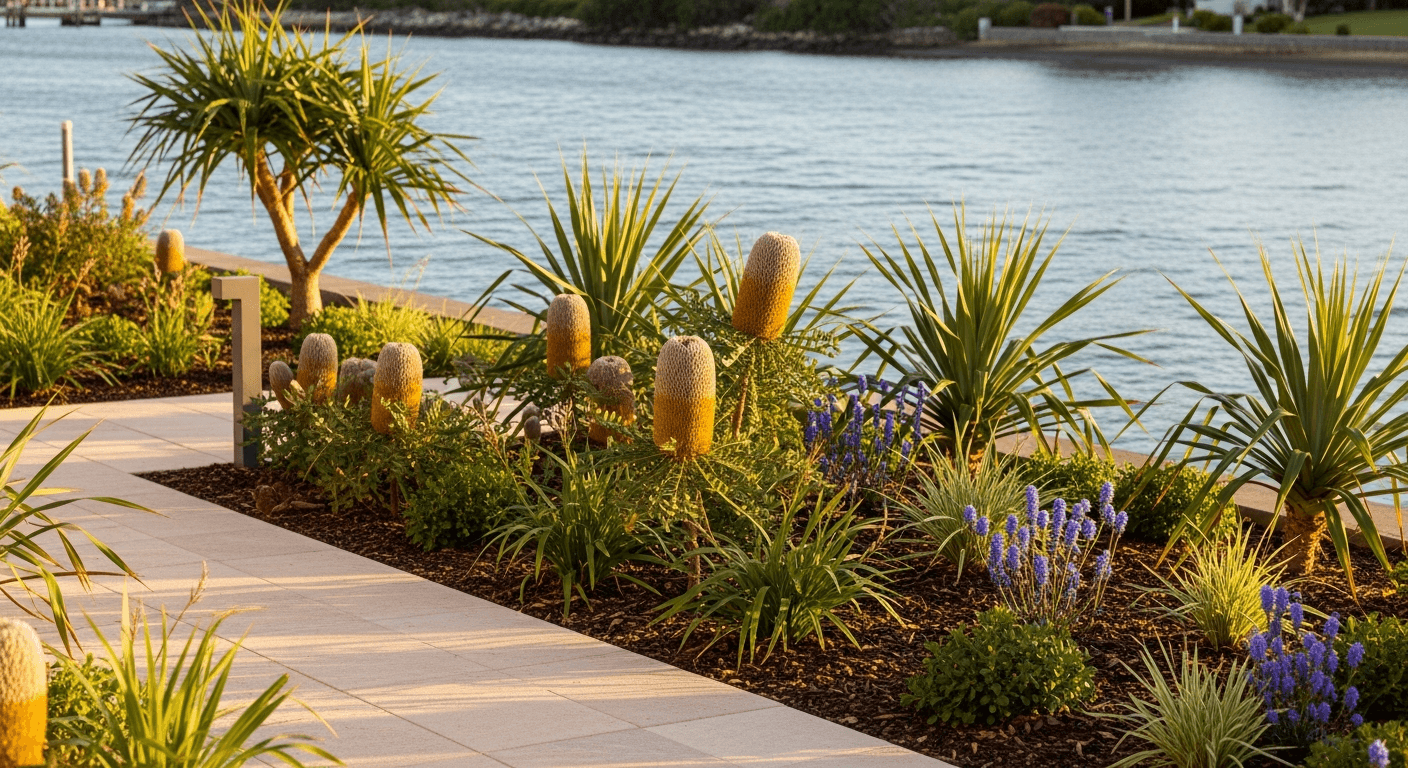
- Pandanus tectorius (coastal pandanus) — iconic Coast species, fully salt-immune, dramatic architectural form. Grows to 4-6m. The defining beachfront plant.
- Banksia integrifolia (coast banksia) — hardy coastal tree, yellow flower spikes, attracts native birds. Grows to 5-8m.
- Howea forsteriana (kentia palm) — premium clean palm, tolerates salt exposure well. Slow-growing but worth the wait.
- Cocos nucifera (coconut palm) — the literal beachfront aesthetic. Verify with council on protected-species rules before planting.
- Pittosporum ‘Silver Sheen’ — fast-growing screen tree, silver foliage, handles salt and wind beautifully.
Mid-storey shrubs
- Westringia fruticosa (coastal rosemary) — fine grey-green foliage, white flowers, clips well into formal hedge shapes. Salt-immune.
- Leucophyta brownii (cushion bush) — silver-white cushion form, no maintenance, fully Coast-tolerant.
- Carissa macrocarpa (Natal plum) — glossy dark foliage, white flowers, edible fruit. Tough Coast performer.
- Coprosma repens varieties — glossy green or variegated, dense form, excellent salt and wind tolerance.
Groundcovers and accent
- Carpobrotus rossii (pigface) — native succulent groundcover, vivid pink flowers in spring, fully salt-immune. Stabilises sandy soils beautifully.
- Lomandra confertifolia ‘Little Con’ — the all-purpose Coast workhorse. Salt-tolerant, drought-tolerant, dense root system holds sandy soil.
- Dianella revoluta ‘Little Rev’ — native tussock with blue-purple flowers, salt-tolerant when established.
- Senecio mandraliscae (blue chalkstick) — striking blue succulent groundcover. Salt-tolerant, drought-tolerant, low-maintenance.
Zone 2: Back-from-beach palette
Everything from Zone 1 still works, plus a broader range of subtropical species that handle occasional salt exposure:
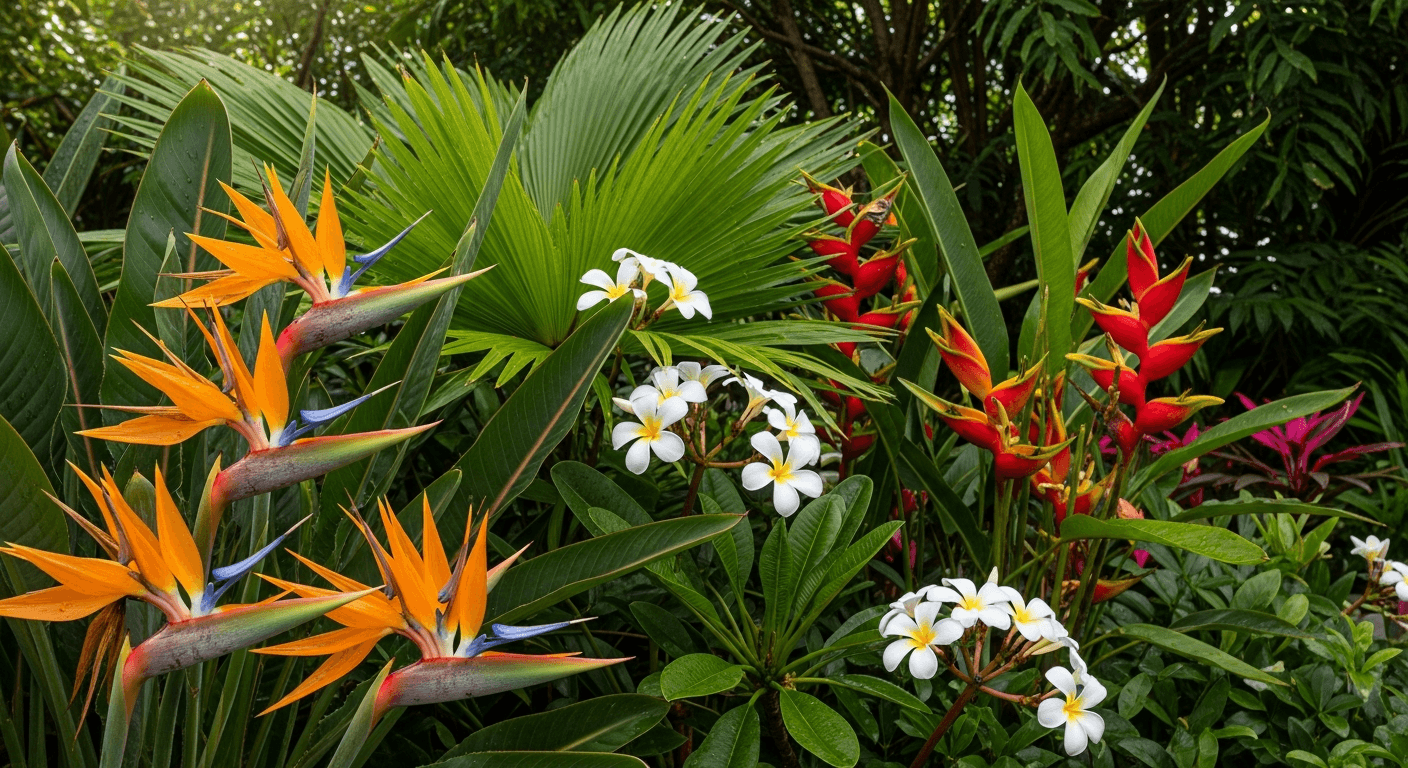
- Strelitzia nicolai (giant bird of paradise) — handles moderate salt exposure when established; iconic Coast architectural plant.
- Plumeria rubra (frangipani) — drops some flowers, but loved by Coast homeowners. Salt-tolerant once established (3+ years).
- Cordyline rubra and Pink Diamond varieties — colour without being needy. Handle salt aerosol when set back from immediate ocean exposure.
- Hibiscus rosa-sinensis — Gold Coast classic, dramatic flowers, moderately salt-tolerant.
- Dietes grandiflora (wild iris) — clumping strap-leaf with white flowers, fully Coast-tolerant.
What NOT to plant near saltwater
Species that look hopeful at the nursery but die within 2-3 years on Coast saltfront properties:
- Roses of any variety — salt aerosol burns leaves and buds within weeks.
- Most grevilleas — particularly the larger feature species (G. robusta, G. baileyana). Inland natives, not coastal.
- Most camellias and azaleas — pH-sensitive, salt- intolerant, suffer in coastal humid conditions.
- Japanese maples (Acer palmatum) — sensitive to wind + salt, leaf-burn within a single season.
- Bottlebrush (Callistemon citrinus) — surprisingly NOT salt-tolerant despite being native. Use only on protected positions beyond Zone 2.
- Jacaranda— beautiful when it works, but doesn't on Coast saltfront. Brittle branches snap in onshore winds, leaves burn.
Planting technique for Coast salt zones
The plants matter, but the technique matters as much. Steps:
- Soil amendment. Dig the hole 2x the rootball width. Mix 50% imported organic-rich loam with the existing sandy soil.
- Slow-release fertiliser at planting.Add Osmocote or equivalent — Coast sandy soils need ongoing nutrient supply that they can't hold themselves.
- Deep mulching. 75mm hardwood chip or eucalyptus mulch. Mulch holds moisture in sandy soils that drain faster than other substrates.
- Establishment irrigation. Deep weekly watering for the first 6 months. Hand-watering or drip irrigation, never spray — spray hits leaves which then accumulate salt + water residue.
- Salt rinse after storms. Hose plants gently with fresh water within 48 hours of any heavy onshore wind event. Removes salt aerosol before it can dehydrate leaf tissue.
Suburb-specific notes
- Surfers Paradise: Mix of beachfront high-rises and canal-front houses. Zone 1 rules apply almost universally — even the back-canal lots get heavy aerosol.
- Main Beach: Almost entirely beachfront or near-beachfront. Pandanus, banksia integrifolia, and coastal rosemary dominate the streetscape for a reason.
- Palm Beach: Streetfront premium homes; Zone 1 immediately back from beach, Zone 2 for second-row properties.
- Tugun, Currumbin: Beachfront properties hit hard by salt aerosol; the inland streets are Zone 2 mostly.
- Broadbeach Waters, Bundall: Canal-front but inland from immediate beach exposure — Zone 2 typically.
Real planting cost on Coast Gold Coast properties
Indicative ranges for fully designed + installed salt-tolerant gardens:
- Small canal-front courtyard (~50 sqm): $5,000-$10,000 including soil amendment, plants, mulch, irrigation.
- Standard beachfront front yard (~200 sqm): $15,000-$30,000.
- Full beachfront block transformation (~600 sqm): $40,000-$80,000+ depending on hardscape inclusions.
Quick start
Building or refreshing a garden on the Coast and worried about salt damage? We do free planting consults across the Gold Coast — happy to walk your property and identify exactly which zone you're in and which species will hold up. Reach out via the contact page or call 0485 032 685.
Frequently asked
Common questions.
How close to saltwater do plants start to struggle?
Salt-laden onshore winds carry salt aerosol up to 3km inland on the Gold Coast — strongest impact within 500m of saltwater. Anything within 200m of beachfront or canal needs genuinely salt-tolerant species; 200m-1km can use moderately tolerant; beyond 1km, most subtropical plants do fine. The specific direction matters too — eastern-facing beachfront blocks get heavier salt exposure than back-of-canal lots.
Are native plants automatically salt-tolerant?
No — only coastal natives. Many inland Australian natives (some grevilleas, callistemons, eucalypts) burn quickly in salt-aerosol environments. The Australian coastal flora is what you want: coastal banksia (Banksia integrifolia), pigface (Carpobrotus rossii), pandanus, coastal rosemary (Westringia fruticosa), and pigeon berry (Duranta erecta) are all genuinely Coast-tolerant.
Will saltwater pool overspray kill garden plants?
Saltwater pools have lower salt concentration than ocean (typically 3,000-5,000 ppm vs ocean's 35,000 ppm) but it's still enough to damage non-tolerant plants over time. Within 2-3m of pool edge, only use salt-tolerant species or build a planted buffer. Heavy splash-out zones should use pavers or hardscape, not lawn or planted beds.
Do I need special soil for coastal planting?
Yes — coastal sandy soils have very low water retention and almost no nutrient holding capacity. Mix 50% imported organic-rich loam into the planting hole, add slow-release fertiliser, and mulch deeply. Even salt-tolerant species will struggle in raw beach sand without amendment.
What about lawn near saltwater?
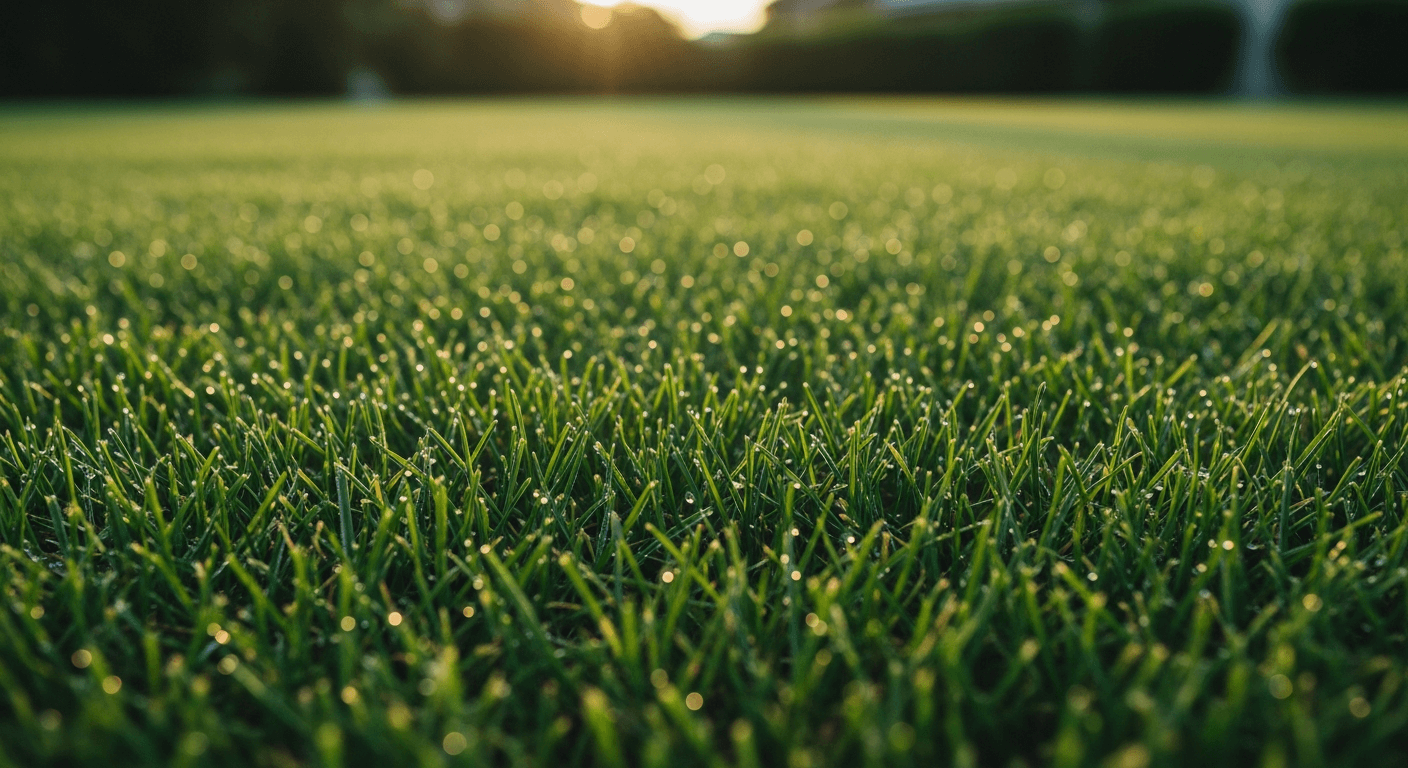
Sir Walter buffalo handles light salt exposure but burns in heavy aerosol zones. Empire zoysia is the best salt-tolerant lawn for canal-front Coast properties — it tolerates salt spray, salt-irrigated water from bore systems, and the dry-then-wet cycle of canal-front lots. Compare turf options in our turf comparison guide.
How often do I need to wash salt off plants?
Light hose down with fresh water once a week during sustained onshore wind events. Pay attention after cyclone-fringe storms — the salt aerosol after a big storm can burn plants within days. A 10-minute hose down (water-trigger nozzle, generous spray) flushes the salt off and saves the planting.
Written by
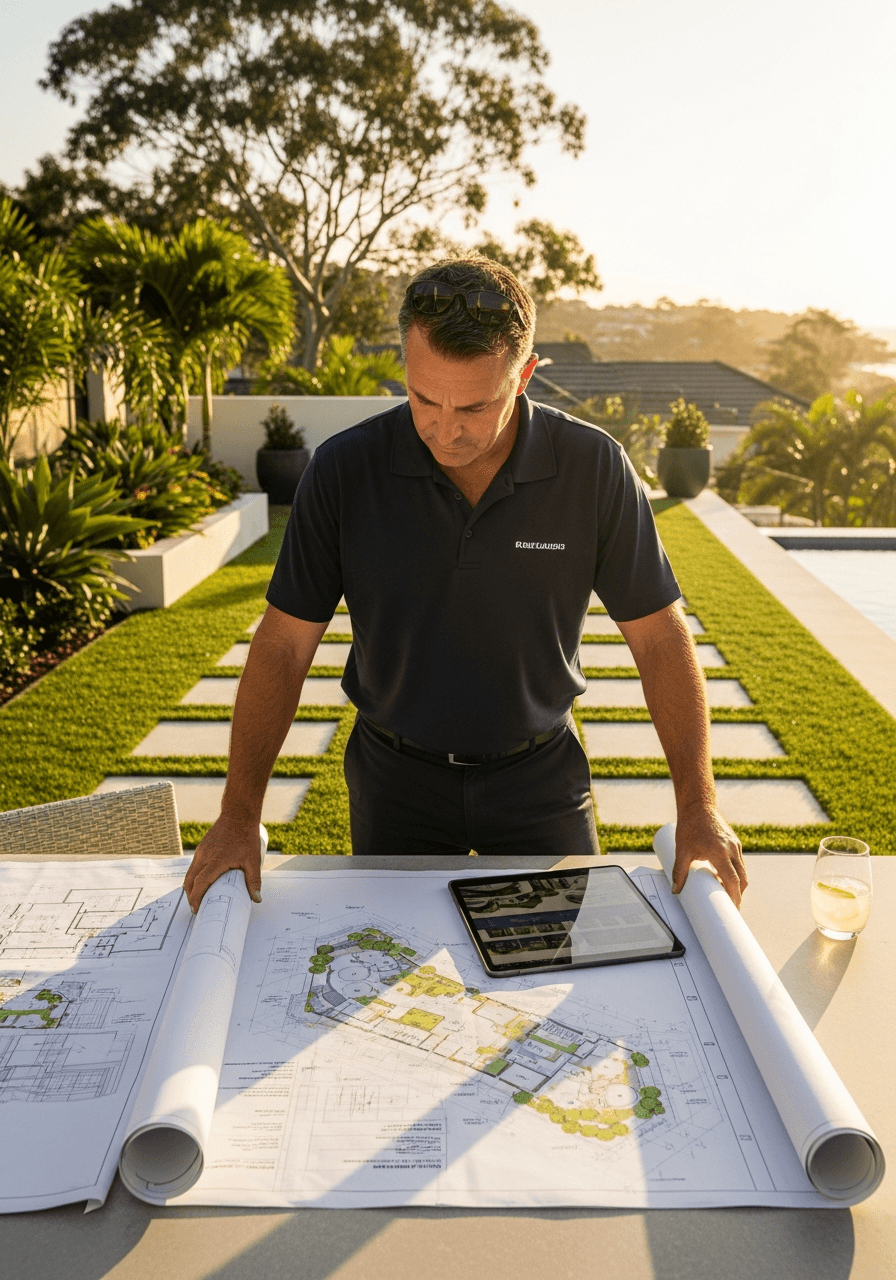
Riley Penn
Founder, Lux Landscaping
Riley is the founder of Lux Landscaping, Cert III qualified in Landscape Construction and QBCC licensed on the Gold Coast. Every Lux quote and consultation comes through him personally — and these guides are written to share what he's learned about doing landscaping properly in the Gold Coast climate.

Ready to start?
Let's talk about your project.
Free site visit. Detailed itemised quote within 24 hours. Reach Riley directly.