Lux Landscaping · Gold Coast
Fencing & screening
Privacy, structure and architectural finish — timber, aluminium, steel, masonry and planted screening designed to last and to not date.
Fencing is rarely the headline of a landscape, but it's almost always what visitors see first and what owners look at most. A bad fence dates the whole property in five years. Powder-coat that fails on the salt side. Timber that warps because the species was wrong. Heights that violate setback rules and trigger a dispute letter from the neighbour.
We do fencing differently because we build it as part of the landscape, not as a stand-alone job. The species, the colour, the height, the line — all of it is chosen against the house, the planting, and the way you actually use the yard. We work in hardwood (spotted gum, blackbutt, merbau), powder-coated aluminium, steel, masonry, and planted screening. Each has its place. None of them is the universal answer.
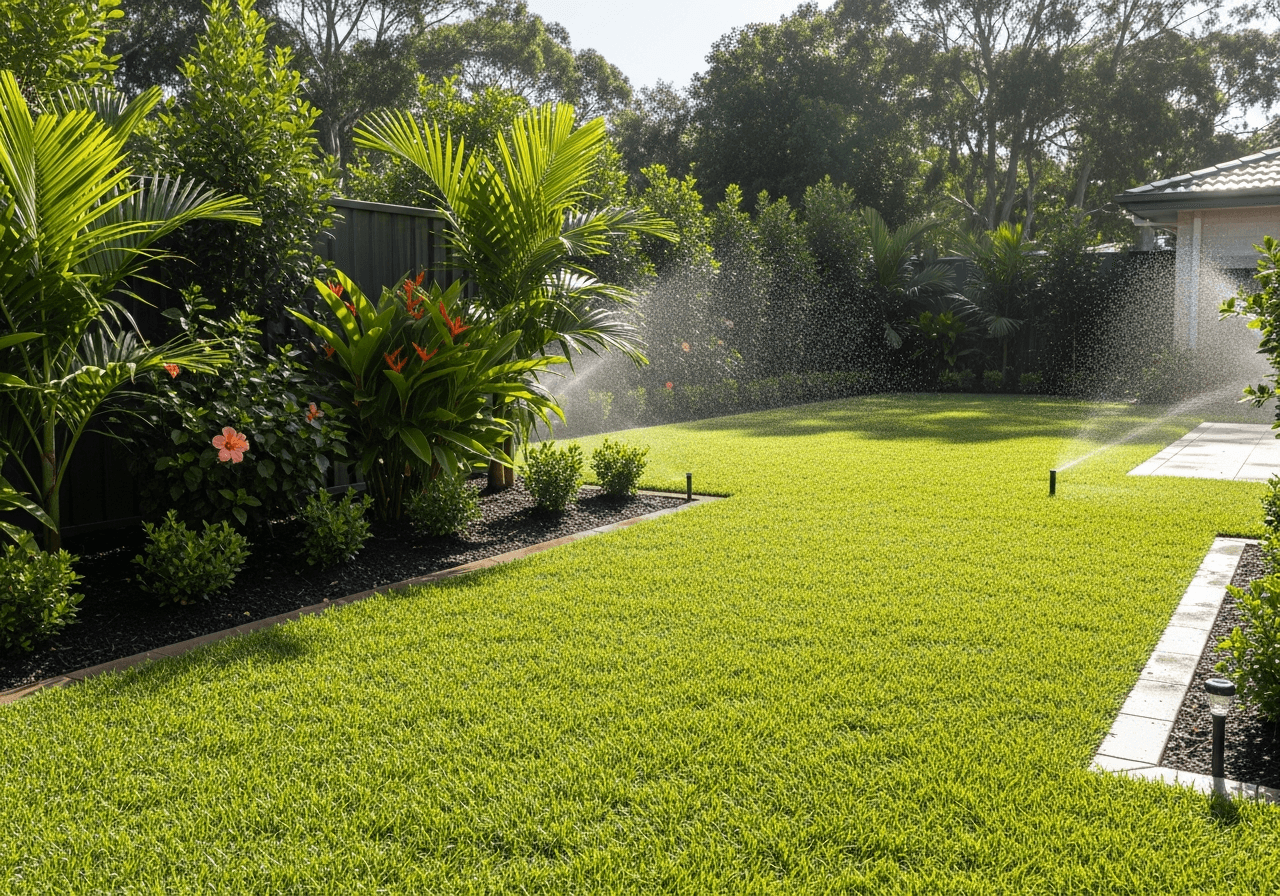
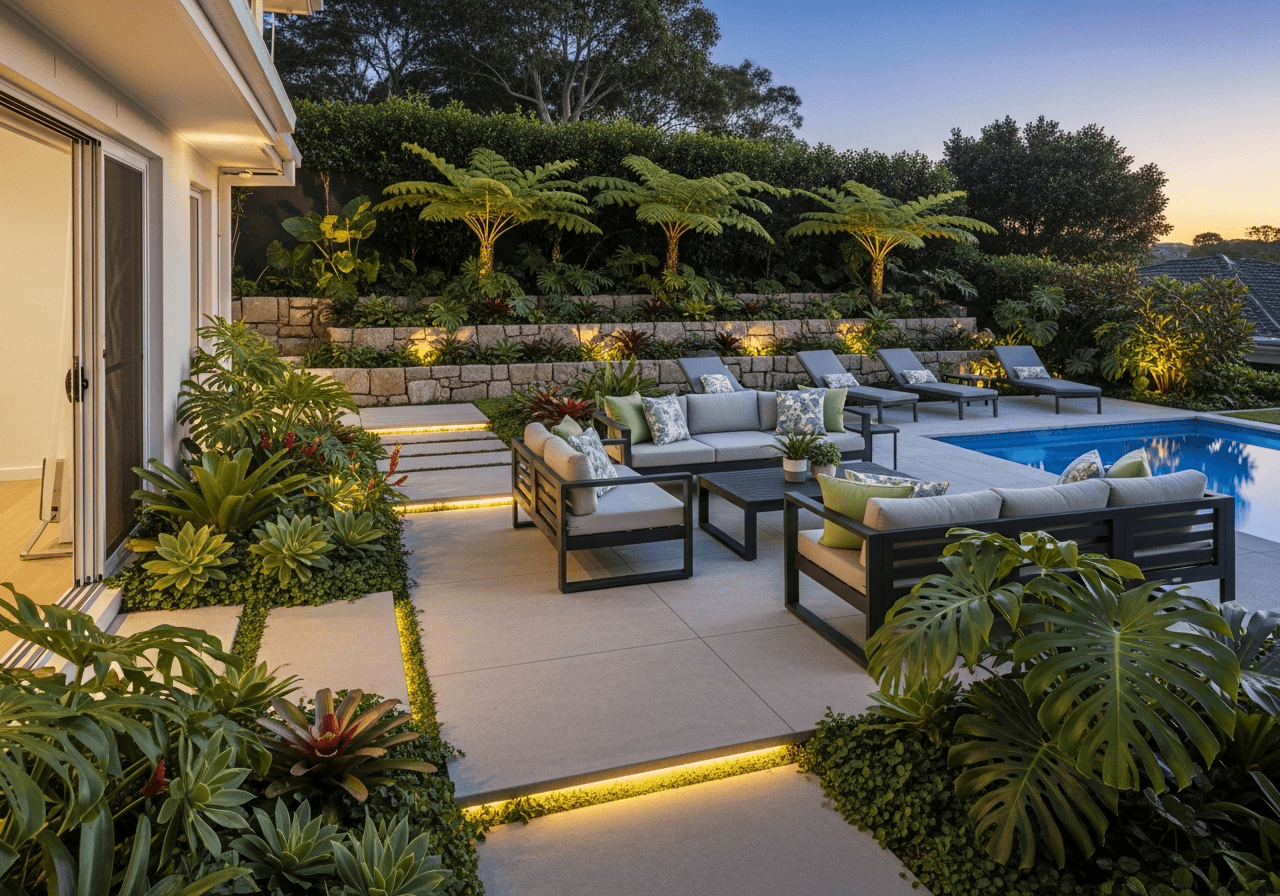
Privacy and screening also matter, especially on Coast blocks where the neighbour's window looks straight into your dining table. We design layered screens — solid base, slatted upper, planted softening — so the privacy is actually private without feeling like a prison.
Scope
What's included.
The Process
How it works.
- 01Step 01
Boundary check + brief
We measure the line, check the certificate of title where there's any boundary doubt, and talk through privacy needs and aesthetic. Dividing-fence costs are split with neighbours by default and we coordinate that.
01Boundary check + brief - 02Step 02
Material + height spec
Material chosen against the house, the existing landscape, and the salt exposure of the site. Height confirmed against council code (1.8m residential default, 2.0m on dividing fences with neighbour agreement, 1.2m–1.5m on street boundaries).
02Material + height spec - 03Step 03
Footings + posts
Concrete footings to engineering depth — 600–900mm depending on height and soil. Posts plumb, square, and on the line. Pool-fence compliance maintained where applicable.
03Footings + posts - 04Step 04
Panels + finish
Panels installed to consistent gap and line. Hardwood oiled or stained. Aluminium colour-matched to the house palette. Steel sealed against rust where appropriate.
04Panels + finish - 05Step 05
Gates + handover
Gates fitted with drop-bolts and security hardware. Automation conduit and power roughed in if requested. Final clean and handover with a maintenance schedule.
05Gates + handover
- Step 01
Boundary check + brief
We measure the line, check the certificate of title where there's any boundary doubt, and talk through privacy needs and aesthetic. Dividing-fence costs are split with neighbours by default and we coordinate that.
- Step 02
Material + height spec
Material chosen against the house, the existing landscape, and the salt exposure of the site. Height confirmed against council code (1.8m residential default, 2.0m on dividing fences with neighbour agreement, 1.2m–1.5m on street boundaries).
- Step 03
Footings + posts
Concrete footings to engineering depth — 600–900mm depending on height and soil. Posts plumb, square, and on the line. Pool-fence compliance maintained where applicable.
- Step 04
Panels + finish
Panels installed to consistent gap and line. Hardwood oiled or stained. Aluminium colour-matched to the house palette. Steel sealed against rust where appropriate.
- Step 05
Gates + handover
Gates fitted with drop-bolts and security hardware. Automation conduit and power roughed in if requested. Final clean and handover with a maintenance schedule.
Gallery
Recent work.

FAQ
Frequently asked questions.
Related services
Most Lux clients combine two or three.
Service area