Lux Landscaping · Gold Coast
Drainage & site prep
The unglamorous work that decides whether the rest of the landscape lasts. Subsurface drainage, ag-line, swales, soakwells, base prep, level correction — done properly.
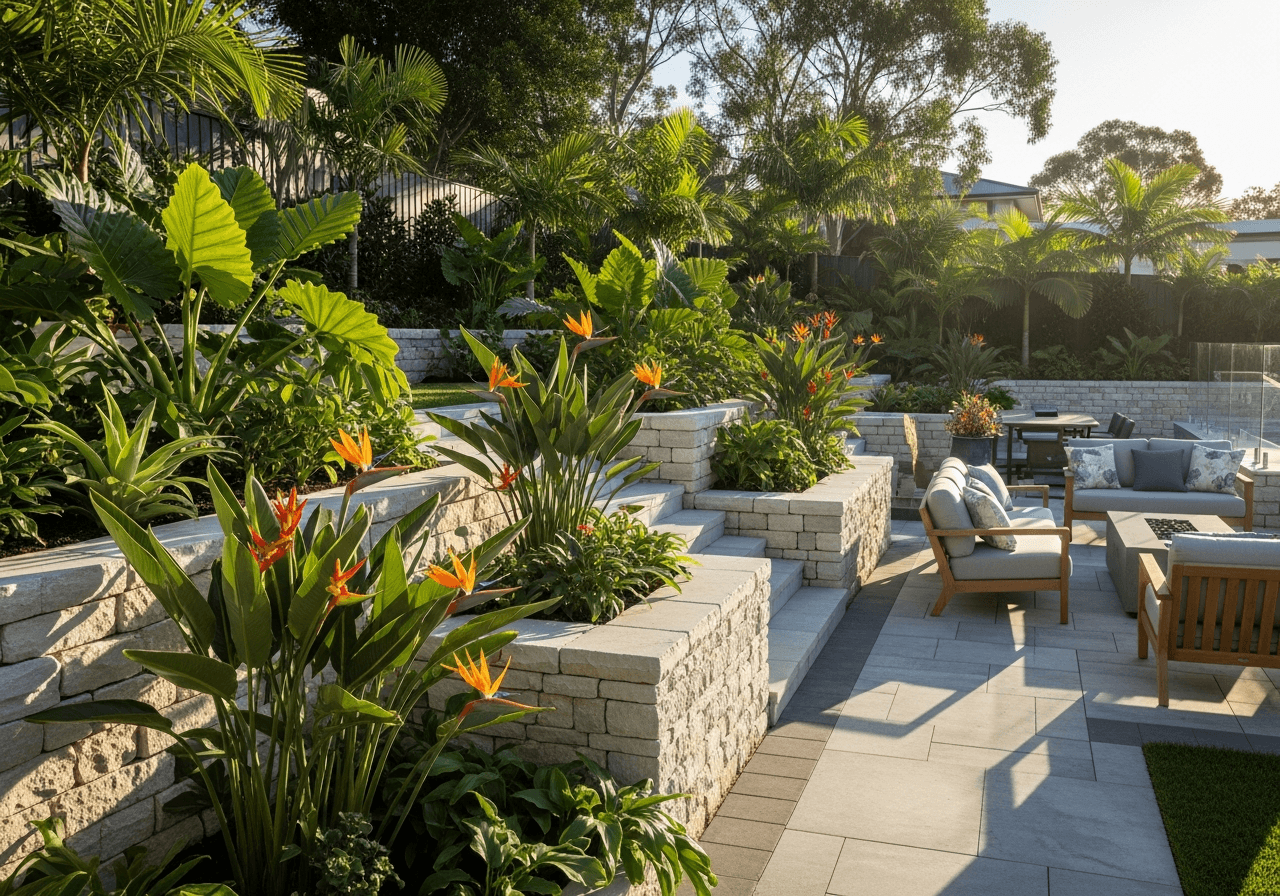
Most landscape failures are drainage failures. Lawn dies because water sits over winter. Retaining walls bow because the back-of-wall drain wasn't installed. Pavers heave because rainwater saturates the subgrade. Pergola posts rot at the base because the slab pooled. The rest of the build can be perfect — if drainage isn't right, the whole site eventually fails.
Lux drainage work is the foundation underneath the rest. We assess soil type and hydraulic conductivity, check for high water tables (real on canal-front and Broadwater-side sites), set falls, install ag-line and aggregate-trench drains, run dish drains and channel grates where needed, size soakwells properly, and connect everything to a discharge point that meets council requirements.
Site preparation is the sister discipline. Decompacting builders' rubble. Importing the right soil profile for planting. Setting levels. Treating and removing invasive species. None of it is glamorous. All of it shows up in the result twenty years later.
Scope
What's included.
The Process
How it works.
- 01Step 01
Site assessment
We walk the site after rain where possible. Identify pooling, runoff direction, suspect zones. Soil samples taken if drainage rate is in doubt. Council overlay (flood, coastal) checked.
01Site assessment - 02Step 02
Drainage design
Falls calculated, ag-line sized, soakwells sized to roof and impermeable surface area. Discharge point identified — kerb, soakwell, or rain garden depending on lot and council rules.
02Drainage design - 03Step 03
Excavation + install
Trenches dug to depth, geofabric wrapped, slotted ag-line laid, aggregate backfilled. Soakwells set on stable base. Surface grates installed at thresholds and low points.
03Excavation + install - 04Step 04
Site prep
Existing rubble dug out and removed. Subgrade decompacted with a ripper. Imported soil placed and graded. Levels confirmed against the build plan.
04Site prep - 05Step 05
Test + handover
Drainage system tested with a hose flood. Falls confirmed against laser. Site handed over with a drainage plan and any council documentation needed for as-built records.
05Test + handover
- Step 01
Site assessment
We walk the site after rain where possible. Identify pooling, runoff direction, suspect zones. Soil samples taken if drainage rate is in doubt. Council overlay (flood, coastal) checked.
- Step 02
Drainage design
Falls calculated, ag-line sized, soakwells sized to roof and impermeable surface area. Discharge point identified — kerb, soakwell, or rain garden depending on lot and council rules.
- Step 03
Excavation + install
Trenches dug to depth, geofabric wrapped, slotted ag-line laid, aggregate backfilled. Soakwells set on stable base. Surface grates installed at thresholds and low points.
- Step 04
Site prep
Existing rubble dug out and removed. Subgrade decompacted with a ripper. Imported soil placed and graded. Levels confirmed against the build plan.
- Step 05
Test + handover
Drainage system tested with a hose flood. Falls confirmed against laser. Site handed over with a drainage plan and any council documentation needed for as-built records.
Gallery
Recent work.

FAQ
Frequently asked questions.
Related services
Most Lux clients combine two or three.
Service area